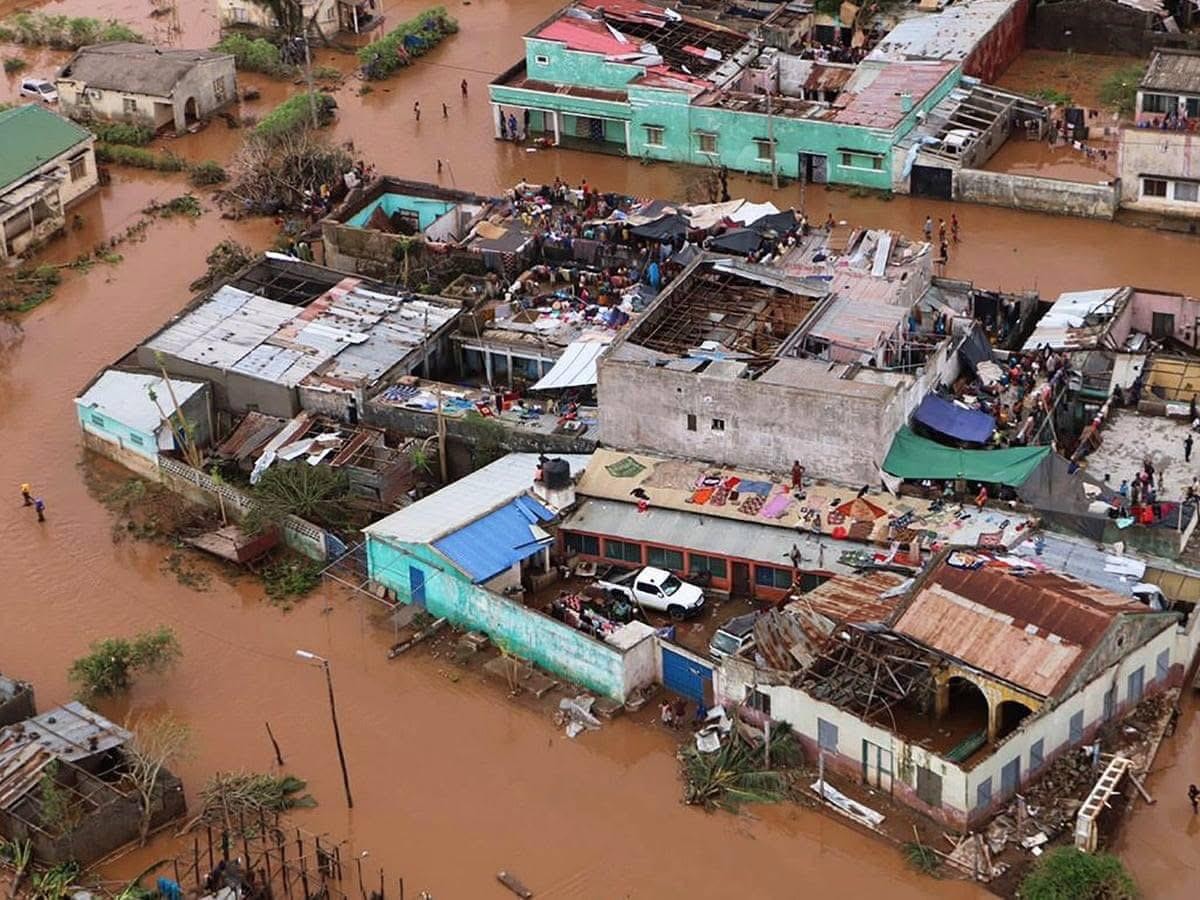
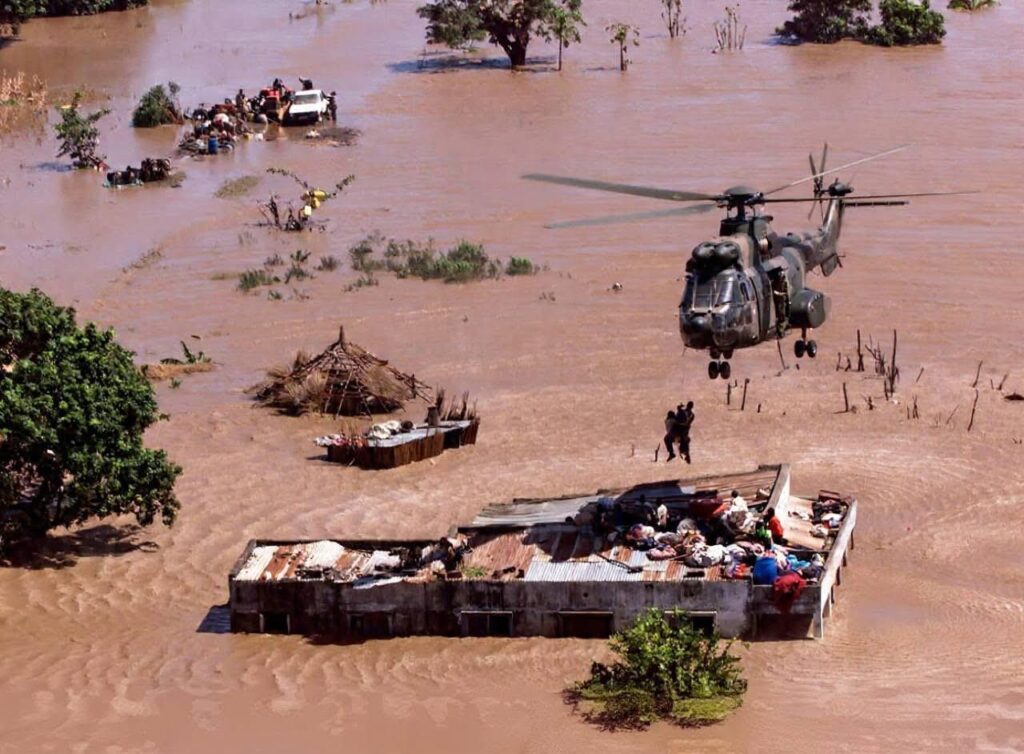
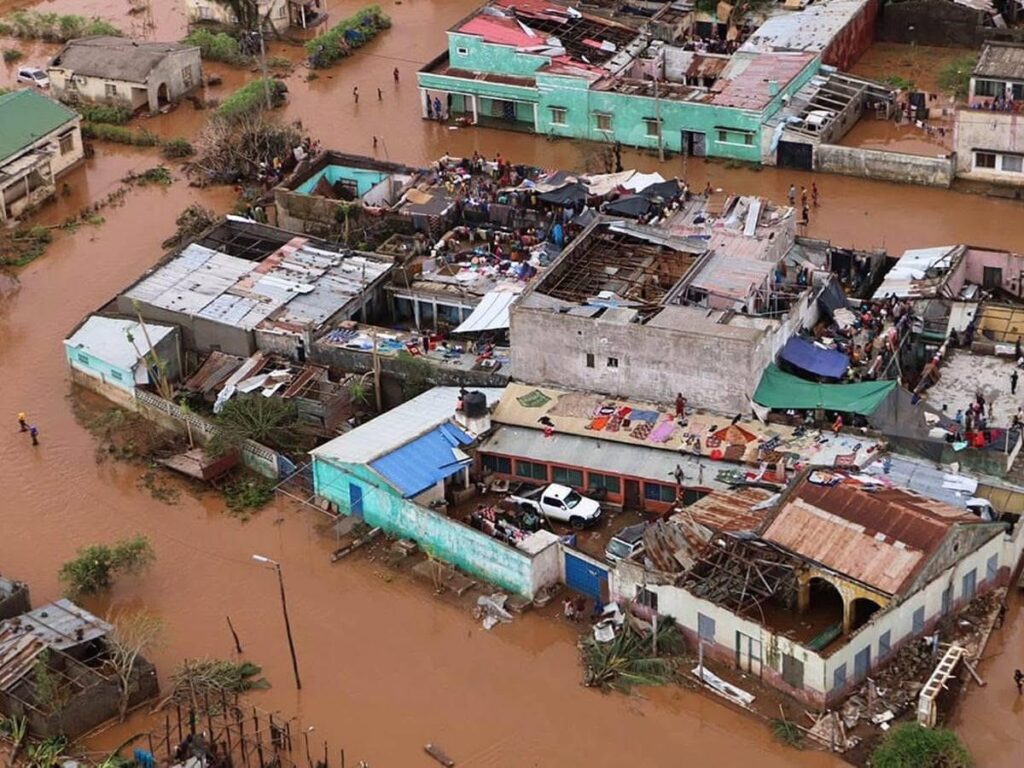
We are currently facing a very challenging time due to severe flooding, which began in late December 2025. Similar to the heavy rains and flooding in north-eastern South Africa, Mozambique has experienced extreme rainfall across the northern, central, and southern regions since the last week of December.
I recently spoke with our clinic manager, Mr Mario Rocha, who later wrote: “As far as I remember (I have lived in Zavora since 2008), we have never experienced this amount of rain in our district (Inharrime, Inhambane Province). In the past two weeks alone, we have had more than 300 mm of rain.”
For comparison, some areas of Mpumalanga in South Africa reportedly received about 500 mm of rain in just three days.
Flooding has been especially severe in parts of Maputo Province and Gaza Province, where water levels remain extremely high. According to national authorities and UN agencies, nearly 5,000 km of roads across several provinces have now been damaged or destroyed. The main north–south highway (EN1), which runs from Maputo past our clinic and continues north through Mozambique, has been cut in three places. While the central section is close to reopening, the section near Xai-Xai at the Limpopo River remains flooded. Xai-Xai lies roughly halfway between Maputo and our clinic. The town centre has been inundated, and conditions continue to worsen (as of 12pm on Tuesday, 20 January 2026).
The Limpopo River, swollen by relentless rain and flooding in South Africa, is carrying vast volumes of floodwater into Mozambique. In South Africa, Limpopo Province and the Kruger National Park have been severely affected: lives have been lost, tourists evacuated, the park temporarily closed, bridges and roads damaged, and homes swept away. Floodwaters have even carried crocodiles downstream into populated areas south of the park.
Back in Mozambique, one of the worst-affected sections seem to be a 3 km stretch of the EN1 between the towns of Três de Fevereiro and Incoluane. Hundreds of vehicles, including commercial trucks, are stranded and unable to travel north or south, with the road closed since last Friday. Flooding here is caused by the Incomati River, which flows from South Africa (where it is known as the Komati River, passing near the southern part of the Kruger National Park).
Critical medication for our clinic is currently stuck on one of these trucks, and we do not yet know how or when it will reach us. In addition, our nearest town, Inharrime—where our referral hospital is located—has run out of petrol and diesel, as fuel trucks are also part of the stranded convoy.
The wider humanitarian impact is severe. More than half a million people have been affected nationwide, with tens of thousands displaced and relocated to emergency shelters. Large areas of Gaza Province, including much of Xai-Xai, remain under water. Health facilities, bridges and supply routes have been damaged, severely disrupting emergency response and humanitarian access. The Government of Mozambique has declared a national emergency as floodwaters continue to isolate communities.
Government figures further indicate that the flood-related death toll has risen to over 100 people since the start of the rainy season. Deaths have resulted from drowning, collapsed buildings, water-borne disease and other flood-related hazards. The risk of disease outbreaks — particularly cholera — is increasing due to contaminated water supplies and disrupted health services.
To further complicate matters locally, Mr Rocha reports: “When I transferred a 13-year-old girl with peritonitis, I was informed that nursing staff at government hospitals and clinics are on strike due to not receiving 50% of their 13th-month bonus paid in December.”
Mr Rocha was planning to fly to SA this weekend (due to the roads being impassable) but we heard yesterday that his flight was now also canceled due to hurricane warnings.
We appreciate your continued prayers and support during this very difficult time.
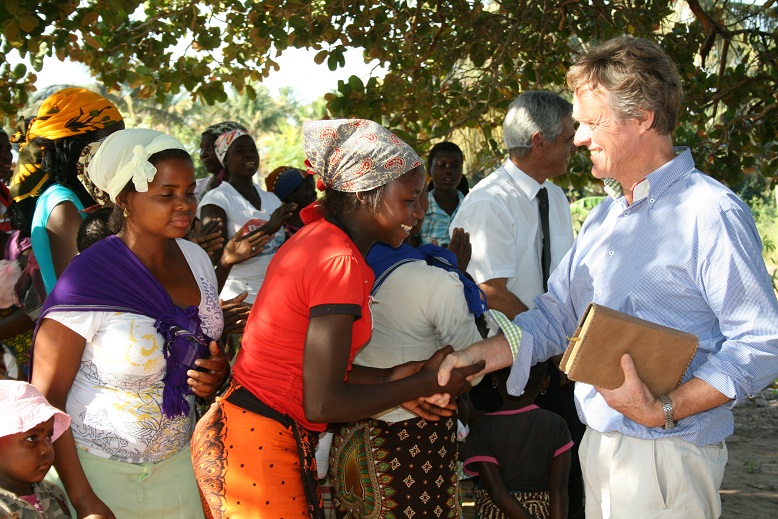
 Dr Paul Zuidema greets the local people at Zavora, Mozambique[/caption]
With the recent passing away of Dr Paul Zuidema who ran our clinic in Zavora, Mozambique, we urgently need medical volunteers (especially doctors) to continue the work there. The periods can be anything from 2 weeks to 2 years. Please let us know if you, or someone you know, would be available to volunteer at the clinic within the next year (starting today).
We also need trained midwives to assist at our maternity ward starting 1 September. There is enough room to accommodate your families should you like to take them along. The clinic is situated on the coast about 450km north of Maputo on route towards Inhambane. DFL management.
If you are able to contribute or volunteer in any way to the cause of our stance and/or projects, please complete and submit the form below. We will contact you as soon as possible.]]>
Dr Paul Zuidema greets the local people at Zavora, Mozambique[/caption]
With the recent passing away of Dr Paul Zuidema who ran our clinic in Zavora, Mozambique, we urgently need medical volunteers (especially doctors) to continue the work there. The periods can be anything from 2 weeks to 2 years. Please let us know if you, or someone you know, would be available to volunteer at the clinic within the next year (starting today).
We also need trained midwives to assist at our maternity ward starting 1 September. There is enough room to accommodate your families should you like to take them along. The clinic is situated on the coast about 450km north of Maputo on route towards Inhambane. DFL management.
If you are able to contribute or volunteer in any way to the cause of our stance and/or projects, please complete and submit the form below. We will contact you as soon as possible.]]>