The Netherlands is backtracking on its prostitution legalisation (Press Release)

prostitution laws amsterdam

Sex work in the Netherlands got out of control. After more than 20 years of experiencing legal prostitution, it is now obvious that the rules and regulations, and even restrictions, do not work. Despite the legislation in place which is attempting to create a safe environment for sex work, there is a great lack of safety, protection and regulation in the Red-Light District, admitted by Femke Halsema, the mayor of Amsterdam.

Crime is escalating, clients are becoming increasingly disrespectful towards prostitutes and residents are complaining about the swelling nuisance caused by drug addicts. It is proven that prostitutes are one of the most vulnerable populations in the Netherlands. 71% has been physically assaulted and 63% has been raped while working as prostitutes. Most struggle with Post Traumatic Stress Syndrome (PTSD). The Netherlands has been listed as one of the top destinations for human trafficking victims.

Since the start of the Red-Light District, gradual restrictions have been put in place. The previous mayor, Job Cohen, planned to close half of the city’s 400 prostitution windows because of the criminal activity going on there.

As a proposed solution, Amsterdam now wants to move prostitutes from the Red-Light District, creating an erotic centre at another place in Amsterdam. However, the suggested locations are in neighbourhoods with families, schools and parks. Parents are concerned about their children’s safety would a sex centre be launched in their vicinity. The European Medical Agency’s head office is located in Amsterdam, due to the proposed safety of the city. They are concerned that putting up an erotic centre will endanger their employees, as they have to work late night shifts and have accommodations in hotels in the area. The Dutch government has guaranteed that the neighbourhood will be kept safe, and no unrest will occur. However, being incapable to control the Red-Light District as it is, they will not be able to control an erotic centre.

The city’s mayor confesses, “Unacceptable situations have arisen, and the council is ready to consider far-reaching solutions.” She has already put even stricter regulations in place concerning the district, including earlier closing times and a cannabis smoking ban. Moving prostitutes to a sex work centre will not remove the crime related to prostitution, it will just relocate the crime scene causing nuisance to a different neighbourhood. It will also cause many prostitutes to go underground, because they do not want to register.

Doctors For Life believes that the solution to the various problems related to prostitution is not to move the prostitution to an erotic centre, but to criminalise  prostitution completely. Prostitution is a basis for criminal exploitation and a state should not participate in it, but rather warn and protect its society against it. The continuous restrictions put in place in the Netherlands are proof of the failure of decriminalising prostitution and should serve as a warning to the South African government as it seeks to legalise prostitution and the use of cannabis


The Medical Opinion on Gender Dysphoria on Minors (Press Release)

Gender Dysphoria

Gender dysphoria refers to persistent, significant distress that an individual experiences due to a perceived difference between their gender identity and their biological sex.
Normalising gender fluidity causes psychological trauma to those suffering from Gender Dysphoria and even more so to those who are not confused about their gender identity. In various countries in America and Europe, this ideology is already promoted at schools and kindergarten.
The claim that a child with gender dysphoria is born with a brain that is of the opposite sex is simplistic, biologically impossible and therefore scientifically incorrect. Every cell in an individual contains identical sex chromosomes, either XX for female or XY for male. There is little supportive evidence for the different opinions about prenatal hormone exposure and structural brain differences that cause gender dysphoria. Infants’ brains are already exposed to their own sex hormones within a few weeks of conception.
The concept of transgender identity is based purely on subjective experience, and the so-called “gender affirmative” approach to gender dysphoria (i.e., supporting social, medical, and surgical transition to a transgender identity) is based on very low certainty evidence – therefore many experts do not agree that it is appropriate.
Doctors for Life is convinced that teaching the prepubertal child about gender dysphoria and then affirming its belief that their gender differs from their biological sex and playing along with a child’s imprinted confusion, leads them to psychological and social dysfunction.
Children who “feel like the opposite sex” or “somewhere in between” do not comprise a third sex; they remain biological boys or girls. Gender ideology has little basis in science and causes more harm than good, especially in minors. Unquestioningly affirming gender dysphoric students’ social transition, harms them by impairing their chances of aligning their gender identity with physical reality; it may propel them down the dismal path of medical transition, firstly puberty blockers are prescribed to prepubertal children with gender dysphoria. The so-called aim of puberty blockers is to arrest the process of puberty. This is supposed to allow the child enough time to explore their gender without the “distress” of onsetting secondary sex characteristics. It is supposed to help the child to decide, whether it should grow into an adult according to their biological sex or according to the imaginary gender, for which they will need cross-sex hormones. However, as their peers grow into normal young men and young women, firstly these children stay stagnant and secondly start feeling more psychosocially isolated and left out.
This approach is not supported by solid scientific research results. Medical professors state that confused children get chemically castrated through the treatment of puberty blockers and will be sterile for life having to consume cross-sex hormones permanently. Taking it to the extreme, sex reassignment surgeries (SRS) are performed on children as young as 13 years. This means that these adolescents can have their healthy breasts cut off or their penises transformed into look-alike vaginas. Clearly, such surgeries cause permanent sterility and transform the child to a patient for the rest of its life.
Neuroscience shows that the development of the brain is not completed until the mid-twenties. This should immediately bring up the question why children under the age of 18 years are allowed to decide on life-changing procedures that are harmful and dangerous.
It is proven, that the general population’s health is better than that of transitioned people’s health. Moreover, it shows that the suicide rate amongst post-operative transgender adults is 20 times greater compared to the general population.
The vast majority of pre-pubertal youth with gender dysphoria will accept their biological sex by late adolescence, even without medical intervention. It is unlawful and unconstitutional to push an ideology onto children through the school system. If this is not child abuse, then what is? Our children need to be protected and given the opportunity for a prosperous future.
(Sources available on request)

New South African Studies on cannabis/dagga (Press Release)

Cannabis studies

New South African Studies done on cannabis/dagga since the legalisation for private use by the Constitutional Courts ruling in 2018

A recent study published in the South African Medical Journal found Cannabis use during adolescence affects the endocannabinoid system, which is particularly susceptible to the harmful effects of cannabis as it undergoes profound developmental changes.

The study states that adolescent cannabis use causes structural, functional, and histological alterations in the frontoparietal, cerebellar and other regions of the brain with some evidence suggesting that cannabis related neurocognitive impairments persist into adulthood, even after prolonged abstinence. Adolescent cannabis use should be actively discouraged, and pregnant women should be advised to avoid cannabis use.

Thirdly According to another study published in the South African Journal of Psychiatry, ADHD is common amongst cannabis users seeking substance abuse treatment and advises that cannabis prevention activities be strengthened.

Also, an observational study by the University of Witwatersrand on cannabis exposures reported to the Poisons Information Helpline of the Western Cape (PIHWC) noted there was a threefold increase in cases reported during the period June 2018 to June 2019 compared to the period June 2015 to June 2016. This coincides with the South Africa Constitutional Court ruling in favour of decriminalising cannabis for private cultivation and consumption.

Accidental ingestion of edible cannabis products was a common occurrence in patients aged 12 years and younger.

The introduction of the Cannabis for Private Purposes Bill in 2020 further clarified how consumers can legally use cannabis.

The expectation of many is that changing legislation will lead to the increased use of cannabis products.

In general, there has been an increase in reports made to health care facilities of acute cannabis intoxication and other adverse effects in countries when cannabis was legalised.

The same study warned that Cannabis use is not without consequences, and it is important for all health care practitioners involved in acute patient care to be aware of the various adverse effects associated with its use.

Prolonged cannabis use during adolescence also disrupts the neuromaturation processes of the brain that occur during this period, with synaptic pruning and white matter development particularly affected. Adolescent cannabis use is also associated with cognitive deficits and interference in logical thinking processes.

Cannabis use during pregnancy increases the risk of adverse outcomes for women and their neonates, to the extent that the American College of Obstetricians and Gynaecologists advised physicians to discourage use of cannabis during preconception, pregnancy, and lactation.

Cannabis use during pregnancy and breastfeeding alters the development of multiple brain regions and may result in lasting functional consequences, including impaired higher-order executive functioning (i.e., impulse control, visual memory, and attention). As a result, attention deficit hyperactivity disorder (ADHD) during childhood affects academic performance and social adjustment.

Prenatal cannabis exposure is associated with an increased risk of foetal growth retardation and childhood behavioural disturbances. Infants exposed to cannabis in utero tend to have lower birthweights and are more likely to need placement in the neonatal intensive care unit compared with infants without exposure. Cannabis may be toxic to human chromosomes, with chromosomal changes caused by in utero cannabis exposure contributing to the lower fertility and higher miscarriage rates known to occur among women who use cannabis.

Doctors For Life International would like to caution the South African government on whether they want to continue to experiment with the approximately 60 million people of South Africa as it moves towards ratifying the Cannabis for Private Purposes Bill introduced to Parliament in October 2020.

Submission for Road Accidents SA (Press Release)

To whom it may concern

Reason for this presentation

This presentation has been compiled by Doctors for Life International out of concern regarding ramifications arising from the legalisation of Cannabis. The concern is founded on the scientific and medical fact that most drugs active in the central nervous system, including cannabis, have an impairment potential and therefore pose a road safety threat. It is essential that regulations are drafted, and parameters placed before the legislature for deliberation, to avoid a spike in intoxication-related traffic incidents and ensure that our roads remain safe.

DISCUSSION:

Drug levels and their effects on different tissue types:

Cannabis blood drug levels in occasional users and chronic users (Toennes et al., 2008) showed an initial cannabis half-life of 30 minutes. The half-life of Cannabis has a complex overlay of different clearance rates, but after 8 hours, the clearance is considerably slower, particularly in heavy users of Cannabis.

Cannabis is absorbed from the lungs. It is redistributed and diluted into the entire blood pool. Simultaneously all other elimination routes start working. Kidney elimination is the fastest initial elimination route and is blood level dependant. Such elimination decreases. Liver and other routes become more important. Because heavy usage damages the liver, elimination slows and consequently drug levels are considerably higher after eight hours in heavy users than in casual, intermittent users.

Brain levels of cannabis are 2-3 times higher than blood levels (Heustis et al., 1992). This is due to accumulation in fat. The brain fatty substance is responsible for insulation around the nerve cell fibres as myelin sheaths. It may then have a profound effect on brain function. This means that blood levels may approximate, but do not accurately reflect brain levels. These levels may therefore still be high enough to cause impairment whilst the blood levels may seem safe.

When cannabis damages the liver, elimination will inevitably become slower and this affects elimination negatively, including in the brain.  For most drugs that redistribute to fat, elimination is slow due to the relative lack of blood flow to fat. This accumulation is not limited to the fat in the brain but occurs in the entire body.

The effect in each patient is drug level dependant. The higher the levels, the more effect it has.

Effects of legalisation of cannabis in other countries

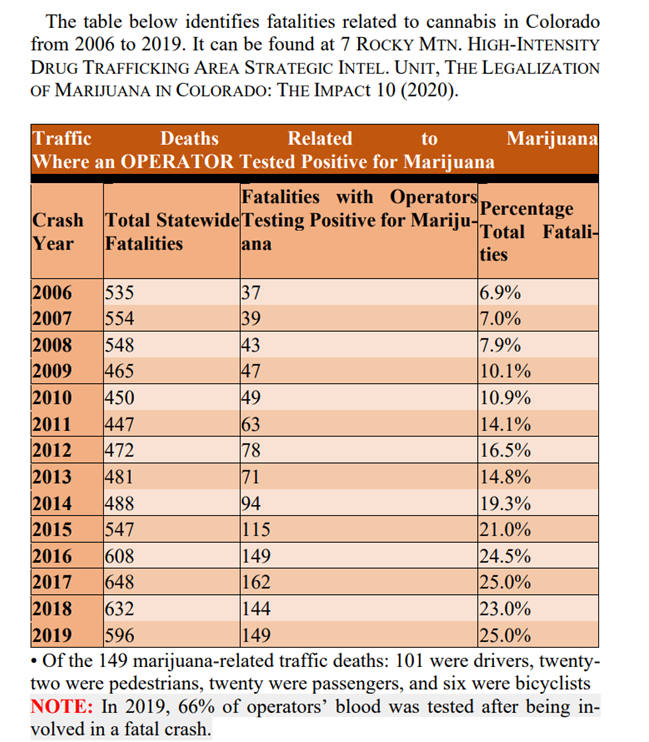
In an address delivered (February 2022) before the Virginia General Assembly, by Prof Bertha Madras (MD), Professor of Psychobiology, Department of Psychiatry, Harvard Medical School she stated that in states where cannabis is legal, an increase in traffic deaths was observed. Her literature review found that cannabis is the most identified drug in deadly vehicle accidents, and it doubles drivers’ chances of being involved in an accident. The reason is that cannabis impairs judgement and many other skills needed for safe driving, e. g., alertness, concentration, coordination, and reaction time. cannabis makes it difficult to judge distances and to react timeously.

Pro-life Doctor Finally Allowed To Practice After Being Barred For Almost Five Years

After almost five years of being barred to practice medicine, the Health Professions Council of South Africa (HPCSA) finally allowed Dr Jacques de Vos’ to continue with his career. Dr De Vos was suspended from completing the gynaecology rotation of his internship at 2 Military Hospital in the beginning of 2017. He was then charged by the HPCSA with unprofessional conduct for his views that the unborn child is a human being.

Following years of delays, the HPCSA finally withdrew the charges against Dr De Vos in September 2020. 2 Military Hospital, however, still refused to sign Dr De Vos off, citing his ‘refusal to comply with basic medical ethics’ (referring to his medical views on the humanity of the unborn child). It was only after persistent intervention of organisations such as Doctors For Life, assistance of various attorneys and advocates, as well as the perseverance of Dr De Vos that the HPCSA relented on 4 April 2022 and approved his registration as a medical practitioner for purposes of his community service.

Whilst Doctors For Life (DFL) is delighted that Dr De Vos can finally proceed to practice medicine, DFL is appalled at the unfair and discriminatory manner in which he was treated. The scientific reality of the humanity of the unborn child is generally undisputed. Nevertheless, Dr De Vos was effectively punished for his scientifically sound stance, by being barred to practice medicine for almost five years without a hearing. This was a gross and inexcusable violation of his constitutional rights. Doctors For Life calls upon the South African government to urgently enact measures to ensure protection of healthcare professionals who act conscientiously in line with sound science, and not to persecute ethical practitioners such as Dr De Vos.

High Court to hear Dr De Vos Application against HPCSA

Media Release

Embargo: Immediate release                                   Enquiries:   Doctors For Life Int.

Date:      01 February 2022                                         Telephone:   032 481 5550

The Review Application of Dr De Vos against the Health Professions Council of South Africa is to heard on 1 February 2022 in the Gauteng High Court, Pretoria. Dr De Vos is asking the High Court to review and set aside the HPCSA’s decision to refuse to reconvene the professional conduct hearing against him.

Dr De Vos was charged with unprofessional conduct for allegedly advising a mother that her 19-week healthy unborn baby was a human being. The proceedings against Dr De Vos by the HPCSA started in 2017. In December 2020 Dr De Vos pleaded “not guilty”. The HPCSA then refused to reconvene the hearing so that the committee could hear the case and deliver a verdict, and cited as reason that the “complainant does not want to proceed”.

Since July 2017 Dr De Vos been unable to proceed with this career as the HPCSA would not issue him with a Medical Practitioner number as the hearing had not been concluded.

The HPCSA is opposing the application. Dr De Vos is represented by Adv K Matthee SC and Adv AR Duminy (instructed by De Wet Wepener Inc c/o Maphalla Mokate Conradi) and the HPCSA is represented by Adv M Majozi (instructed by Mgeno & Mteto Inc).

Doctors For Life has been assisting Dr De Vos since the beginning of 2017 with legal representation as well as renowned expert witnesses in the fields of embryology, human anatomy and psychology.

For more information contact Doctors For Life at [email protected]

Media Release: Before South Africa Decides to Permit Euthanasia, Consider the Evidence that often Get Glanced Over.

Featured Video Play Icon

Media Release

Embargo: Immediate release                    Enquiries:    Doctors For Life Int.

Date:       21 May 2021                               Telephone:   032 481 5550

  • Human Rights Organisation expressed concern over impact euthanasia law will have.
  • Canadian Medical Health Association concerned about Euthanasia
  • New England Journal of Medicine (NEJM) published a study which uncovers abuse of the Euthanasia law.
  • Canadian pressure stories reveal how doctors often pressure patients into choosing euthanasia even after they showed no interest.

Since South African courts will again hear attempts to legalize euthanasia or Assisted Suicide, Doctors For Life (DFL) felt it necessary to highlight some key points from countries that have gone ahead and have valuable lessons for us to learn from, and to avoid exposing South African families to the same thing.

In January this year, the United Nations Human Rights Organisation (Office of the High Commissioner) published a statement on their website titled: Disability is not a reason to sanction medically assisted dying. In it, the UN Experts expressed concern about the growing trend to legalize euthanasia for people with disabilities and said that “when life-ending interventions are normalised for people who are not terminally ill or suffering at the end of their lives, such legislative provisions tend to rest on – or draw strength from – ableist assumptions about the inherent ‘quality of life’ or ‘worth’ of the life of a person with a disability.” They also said that “Disability should never be a ground or justification to end someone’s life directly or indirectly.”

In February this year, the Canadian Medical Health Association (CMHA) responded to the Canadian government’s recent decision to permit Medical Aid in Dying (MAiD) for people with mental illnesses expressing deep disappointment. According to CMHA, until the health care system adequately responds to the mental health needs of Canadians, assisted dying should not be an option. This they also testified before the Senate in November of 2020. CMHA points out that it is “not possible to determine whether any particular case of mental illness represents “an advanced state of decline in capabilities that cannot be reversed.” And the CMHA “know that cases of severe and persistent mental illness that are initially resistant to treatment can, in fact, show significant recovery over time. Mental illness is very often episodic. Death, on the other hand, is not reversible. In Dutch and Belgian studies, a high proportion of people who were seeking MAID for psychiatric reasons, but did not get it, later changed their minds.”

In August 2017, the New England Journal of Medicine (NEJM) published a Netherlands study titled: End-of-Life Decisions in the Netherlands over 25 years which uncovered abuse of the law. In 2015 there were 150 assisted suicide deaths, 431 terminations of life without request in the Netherlands. The Netherlands euthanasia law did not prevent 431 terminations of life without request. The euthanasia lobby will argue that legalizing euthanasia and assisted suicide will regulate and prevent these types of deaths, but in fact it normalizes it as an acceptable medical practice and makes it impossible to prevent or even censure someone who carries out similar acts.

One of the things that are hidden in the Euthanasia debate is the stories of pressure and coercion, DFL will only mention one of the many examples. In 2015-2016 euthanasia was sold to Canadians as legislation with safeguards that would only be for terminally ill people who were suffering and nearing death. In 2016, it was implied that requests for euthanasia would be made by the patient and not suggested by medical professionals. In August 2016, Candice Lewis (25) who was born with multiple disabilities was pressured by a doctor to ask for euthanasia. Candice was very sick and receiving treatment. The doctor asked her mother if she knew that assisted death was legalized – her mother said no.  The doctor said that he was in support of euthanasia and wanted to help her. The doctor was told that they were not interested in euthanasia and then the doctor told Candice’s mother that she was being selfish and he challenged Candice by saying: “do you know how sick you are?” Candice eventually recovered but just imagine, if the doctors advise was trusted and they made a decision based on that. More such examples can be referred to but this gives us just a glimpse of what South Africa can expect if Dr Suzanne Walters and her patient get their way and manage to persuade the court to legalize euthanasia in South Africa. Even though the UN Human Rights experts concern pertained to the disabled and euthanasia for them would amount to normalising and ableism, DFL reckons that the same is true for any other form of euthanasia.

References:

Canadian Medical Health Association: https://cmha.ca/news/statement-on-medical-assistance-in-dying-maid

Human Rights Statement: https://www.ohchr.org/EN/NewsEvents/Pages/DisplayNews.aspx?NewsID=26687&LangID=E

New England Journal of Medicine: https://www.nejm.org/doi/full/10.1056/NEJMc1705630?query=featured_home

Article on SA attempt to legalize Euthanasia: https://www.groundup.org.za/article/atheists-go-court-over-right-die/

Stories of pressure & Coercion: https://www.youtube.com/watch?v=tN4IgIlzDdE

Joint CDC and FDA Statement on Johnson & Johnson COVID-19 Vaccine

Tweet CDC

As of April 12, more than 6.8 million doses of the Johnson & Johnson (Janssen ) vaccine have been administered in the U.S. CDC and FDA are reviewing data involving six reported U.S. cases of a rare and severe type of blood clot in individuals after receiving the J&J vaccine. In these cases, a type of blood clot called cerebral venous sinus thrombosis (CVST) was seen in combination with low levels of blood platelets (thrombocytopenia). All six cases occurred among women between the ages of 18 and 48, and symptoms occurred 6 to 13 days after vaccination. Treatment of this specific type of blood clot is different from the treatment that might typically be administered. Usually, an anticoagulant drug called heparin is used to treat blood clots. In this setting, administration of heparin may be dangerous, and alternative treatments need to be given.

CDC will convene a meeting of the Advisory Committee on Immunization Practices (ACIP) on Wednesday to further review these cases and assess their potential significance. FDA will review that analysis as it also investigates these cases. Until that process is complete, we are recommending a pause in the use of this vaccine out of an abundance of caution. This is important, in part, to ensure that the health care provider community is aware of the potential for these adverse events and can plan for proper recognition and management due to the unique treatment required with this type of blood clot.

Right now, these adverse events appear to be extremely rare. COVID-19 vaccine safety is a top priority for the federal government, and we take all reports of health problems following COVID-19 vaccination very seriously. People who have received the J&J vaccine who develop severe headache, abdominal pain, leg pain, or shortness of breath within three weeks after vaccination should contact their health care provider. Health care providers are asked to report adverse events to the Vaccine Adverse Event Reporting System at https://vaers.hhs.gov/reportevent.htmlexternal icon.

CDC and FDA will provide additional information and answer questions later today at a media briefing. A recording of that media call will be available on the FDA’s YouTube channel.

Source: The Centers for Disease Control and Prevention (CDC) website Statement | CDC Twitter post

New Study: Secondhand Marijuana Smoke More Hazardous Than Secondhand Tobacco Smoke

Smoke
(Alexandria, VA) Today, a new study found that secondhand marijuana smoke could be more hazardous to one’s health than secondhand smoke from cigarettes. 
The study compared emissions of fine particles, or particulate matter (PM 2.5) from tobacco smoke and marijuana smoke and found that the PM 2.5 emission rate of pre-rolled marijuana joints was 3.5 times higher than the average PM 2.5 emission rate of Marlboro cigarettes. Furthermore, the study also found that smoking marijuana indoors produced much more secondhand smoke emissions than the use of cigarettes indoors. 

“Previous research has shown us that secondhand smoke from marijuana is a hazard to health to both smokers and non-smokers alike, and now this study shows that marijuana smoke distributes more harmful particles into the air than cigarettes do,” said Dr. Kevin Sabet, president and co-founder of Smart Approaches to Marijuana (SAM) and a former senior drug policy advisor to the Obama Administration. “With the recent declaration that the use of marijuana in public areas will be allowed under the new legalization law in New York State, this new research solidifies the need for further public health guardrails to be put in place, not only in New York, but also in other states where the public use of marijuana proliferates. These risks to health cannot be ignored.” 

This study follows previous research finding marijuana users had higher levels of smoke-related toxins in their blood and urine than non-smokers. Marijuana users were found to have higher levels of dangerous toxins such as naphthalene, acrylamide, and acrylonitrile than those who do not smoke marijuana or tobacco. These toxins are associated with severe harms such as cancer, anemia, and liver and mental health damage. 

Legalization organizations have long targeted provisions of the Clean Indoor Air Act to allow for a marijuana exception. They have also denied the harms of secondhand smoke in areas such as public housing, which exposes the most vulnerable. Recent studies have found public housing exposes children to secondhand smoke more so than tobacco. 

Editor’s note: This article along with it’s linked resources was first published by Smart Approaches to Marijuana (SAM)

PRO-LIFE DOCTOR TAKES HPCSA TO COURT

Media Release

Embargo: Immediate release                                   Enquiries:   Doctors For Life Int.

Date:      22 January 2021                                         Telephone:   032 481 5550

Dr Jacques de Vos, whose professional conduct hearing has been delayed by the HPCSA since 2017, has applied to the North Gauteng High Court to compel the HPCSA to finalise the hearing against him. In 2017 Dr De Vos has been suspended from the gynaecology rotation during his internship at 2 Military Hospital, Cape Town after he advised a woman that her 19-week old unborn baby is a human life.

Since July 2017 Dr De Vos has been prevented from practising medicine and has been charged with unprofessional conduct. For the past three and a half years the HPCSA has been delaying the hearing against him, applied for postponements, and unilaterally withdrew the charges against Dr De Vos only to reinstate it almost a year later.
In December 2019 Dr De Vos pleaded “not guilty” to the charges against him. Despite the best efforts of his legal team, the HPCSA ignored Dr De Vos’ pleas to state his case. In September 2020 the HPCSA again unilaterally “withdrew” the charges for a second time. Lawyers for Dr De Vos will argue in the High Court that he is entitled to a conviction or acquittal because he has entered a plea, and that the HPCSA must proceed with the hearing with urgency.

Dr De Vos, who is wheelchair-bound, has faced severe ongoing prejudice as the result of the unexplained delays, failure to meet deadlines, and refusal to provide Dr De Vos with information of his alleged “misdemeanours”. This, despite Dr De Vos being ready to state his case, and despite expert witnesses in human anatomy and psychiatry being ready to testify.

Dr De Vos is a member of Doctors For Life International and has been assisting him with his case including fundraising to cover expenses (all lawyers are working pro-bono though), and arranging expert witnesses. For more information, contact Doctors For Life at [email protected]